
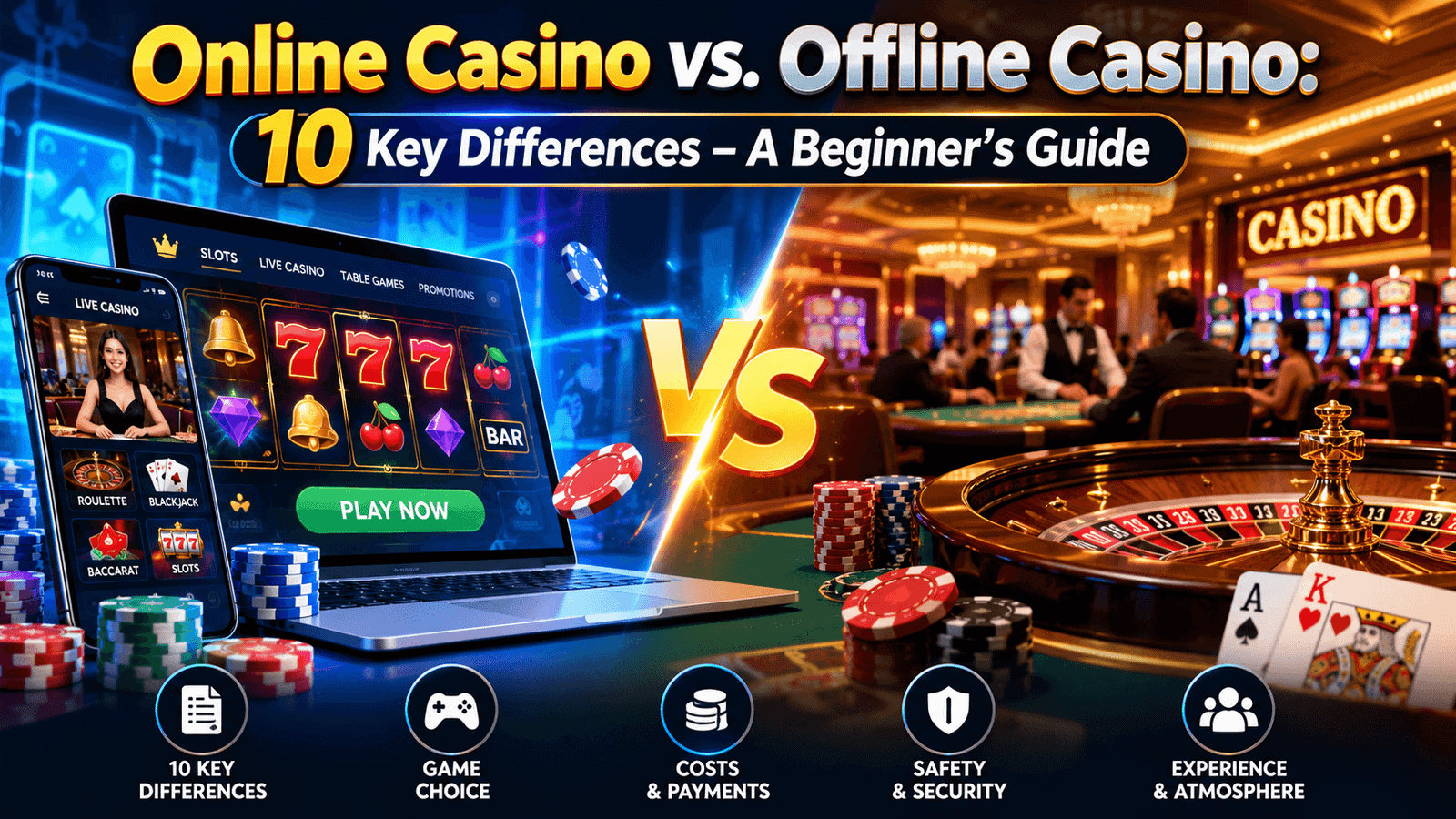
A casino on a phone can look much like a casino in a city. Both may have slots, roulette, and card games. Yet the way each one works is not the same. One uses an app or website. The other uses a real building, staff, and gaming tables.
This guide looks at ten real differences between online and offline casinos. It explains what happens when a game starts, how money moves, and what rules matter. It also shows why a win is never certain. The aim is to help beginners understand casinos, not to push anyone to gamble.
What Are Online and Offline Casinos?
An online casino is a website or app with casino-style games. Some games run fully on software. Others show a real dealer on a live video feed. A user usually needs an account to play for money, where the law allows it.
An offline casino is a place people visit in person. It may have card tables, roulette wheels, and slot machines. Staff check entry rules, handle chips, and watch the games. Both types of casino may need a licence, and both can lead to money loss.
Online Casino vs. Offline Casino: Quick Comparison
| Feature | Online casino | Offline casino |
|---|---|---|
| Where it works | Website or app | Physical building |
| Main games | Digital and live-video games | Tables and machines |
| Getting there | Internet access | Travel to venue |
| Game results | Software or live equipment | Physical or electronic equipment |
| Money | Digital account and payments | Cash, chips, and other approved methods |
| Game choice | Often a large catalogue | Limited by space and staff |
| Rewards | Account-based offers | Venue-based rewards |
| Help | Online support and tools | Staff at the venue |
| Security | Account and data controls | Staff, cameras, and entry checks |
| Main risk | Fast and easy repeat play | Long sessions and extra visit costs |
10 Key Differences Between Online and Offline Casinos
1. Access: A Screen or a Trip
An online casino can be opened from a phone or computer where it is legal. A person does not need to book a trip or find a gaming hall. Some sites stay open all day. Still, the service may block users based on their location.
An offline casino needs a visit. Guests must follow its hours, age rules, and dress rules, if any. Travel may take time and cost money. A real venue also sets a clear start and end to the trip.
Why it matters: Easy access can save time, but it can also make repeat gambling too simple.
2. Atmosphere: Private Screen or Busy Room
Online games show cards, wheels, or reels on a screen. Sound and colour help make the game feel lively. A player may see chat messages, but they do not share a real table with others. Live video games can add a human dealer.
At an offline casino, people hear chips, cards, and machines. They can talk to a dealer or other guests. Some venues also have food, shows, and hotels. This makes the visit a wider social event.
Why it matters: A screen is not the same as a room full of people, even when the games look alike.
3. Game Choice: Software or Floor Space
Online sites can list many games on one page. A slot game needs server space, not a large machine on a casino floor. Sites may show many themes and rule sets. Some also offer free demo versions with no real-money stake.
An offline casino needs space for each table or machine. It also needs staff for games with dealers. A small venue may have only a few roulette tables. A large one may offer more choice, but space still has a limit.
Why it matters: More titles do not mean better odds. Each game has its own rules.
4. Game Results: RNGs, Cards, and Wheels
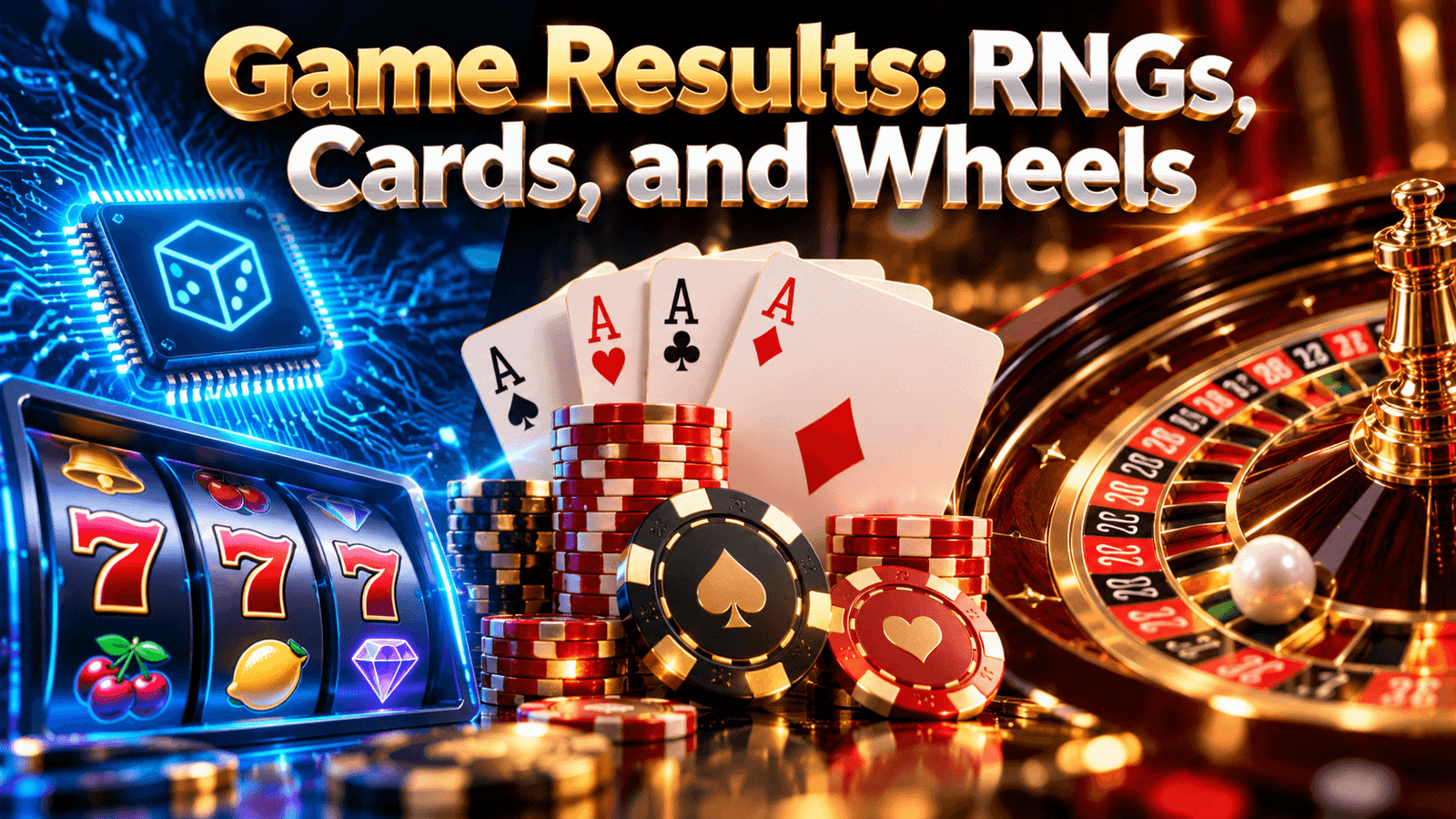
Many online games use a random number generator, called an RNG. This computer system helps choose game results. In a digital slot game, it helps decide the result of each spin. A live dealer game is different because it uses real cards or wheels.
How an online casino game works
At an offline table, a dealer may shuffle cards or spin a wheel. Yet a physical slot machine can also use an RNG. So online does not always mean software-only, and offline does not always mean no software.
Why it matters: The game rules and testing matter more than the screen or building.
5. Money: Digital Balances or Casino Chips
Online casino accounts often show deposits, bets, and withdrawals in one place. Players may need an online betting ID to access their accounts and manage gaming activities. Payments may use cards, bank services, or other approved methods. Before a withdrawal, a site may check the user’s identity. Fees and waiting times depend on the operator.
At a land-based casino, guests may turn cash into chips at a cashier. They use chips at tables and return them after play. Some venues also accept electronic payments. Large payments may still need identity checks.
Why it matters: A balance on a screen is not the same as cash already received.
6. Costs: Travel and Bet Size
An online player does not need to pay for travel or a hotel. Some games have low starting bets, but this is not true of every site. Small bets can still add up after many fast rounds. Payment and exchange fees may also apply.
An offline visit can cost money before the first bet. A guest might pay for fuel, parking, food, or a room. Table minimums can change by venue and time. A busy table may also have a higher minimum bet.
Why it matters: The true cost includes both bets and any extra fees.
7. Bonuses: Terms Matter More Than Big Numbers

Online sites may show free spins, credits, or welcome deals where allowed. These offers often have rules. For example, a bonus may require more play before any related money can be taken out. Some games may not count towards those rules.
Offline casinos may give points, meals, rooms, or other rewards. A reward card may track eligible visits or spending. Some venues also give gaming credits. The terms can still limit when and how a reward is used.
Why it matters: A bonus is not the same as free cash. Read the rules first.
8. Odds: The Same Maths Can Apply
Some people think online casinos always pay more. That is not true. A game’s chance of winning comes from its rules and payouts. A roulette wheel with the same layout and payout rules has the same basic maths online or offline.
RTP example: 96% return and 4% house edge
Return to Player, or RTP, is a long-term measure used in casino games. A 96% RTP means a game is designed to return ₹96 for every ₹100 wagered over a very large number of bets. However, this does not mean every player will get ₹96 back after betting ₹100. Actual winnings or losses can vary.
Why it matters: A high RTP does not promise a win in one session.
9. Safety: Accounts or On-Site Staff
Online casinos hold account and payment data. A regulated site may use secure connections, login checks, and identity checks. But fake sites and weak account security can put users at risk. A site being easy to find does not prove it is licensed.
Offline casinos may use cameras, guards, and trained staff. Staff can check IDs and watch gaming tables. Yet a physical building is not proof of fair play or legal approval. The local licence and rules still matter.
Why it matters: Check the law and the operator, not just the look of the site or venue.
10. Spending Control: Tools and Human Help
Online sites in some regulated places offer deposit limits, time alerts, and self-exclusion. Account records can help show how much was spent. But constant access and fast games can also make it hard to stop. Limits only help when they are used.
Offline casinos may have trained staff, help notices, and self-exclusion plans. Travel and closing hours can create breaks. Still, a long visit can lead to large losses. A person should never chase money they have already lost.
Why it matters: Both formats carry real risk. Taking a break is always an option.
How Casino Odds Work: A Simple Example
Every casino game has a set of rules. These rules decide which results win and how much a winning bet pays. The house edge is the casino’s expected share of total bets over many rounds. It does not predict what will happen on one spin.
Roulette wheel comparison
| Example | Basic rule | What it shows |
|---|---|---|
| European roulette | 37 pockets, including one zero | Standard straight-up bet has about 2.70% house edge |
| American roulette | 38 pockets, including zero and double zero | Standard straight-up bet has about 5.26% house edge |
| Slot with 96% RTP | Theoretical long-run return is 96% | A single player may get much less or much more |
For example, a roulette bet on one number usually pays 35 to 1. Adding a second zero pocket lowers the chance of a win without raising that payout. This is why American roulette has a larger house edge under standard rules. The maths does not change just because the game moves online.
Which Format Fits Which Need?
There is no one format that is best for everyone. Someone studying game software may want to look at digital demos. Someone learning how a live table works may want to read about real dealers and chips. Neither choice requires placing a real-money bet.
| If you want to understand… | Look at… | Remember… |
|---|---|---|
| Game software | Online game demos and rules | A demo does not prove real-money safety |
| Live table play | Physical or live-video table guides | Rules and payouts still decide odds |
| Costs | Bet limits, fees, and travel costs | Small bets can grow into large losses |
| Safety | Licensing, checks, and support tools | No casino removes financial risk |
Advantages and Disadvantages
| Type | Useful features | Main limits |
|---|---|---|
| Online | No travel; many digital games; account history | Screen and internet needed; fast repeat play; digital fraud risk |
| Offline | Face-to-face staff; real tables; social setting | Travel costs; opening rules; fewer games at smaller venues |
Are Online and Offline Casinos Legal?
Casino laws are not the same in every country. Some places allow licensed online casinos. Others ban them or place strict limits on real-money games. Land-based casinos can have different rules from online sites in the same country.
In India, online money games face major legal limits. Rules can also change over time. Before using any gambling service, an adult must check the law where they are. A website loading on a phone does not mean its use is legal.
Frequently Asked Questions
Are online casinos and offline casinos the same?
No. They may offer similar games, but one works online and the other runs in a physical venue. Their payments, staff, and access are different.
Do online casinos always have better odds?
No. The game rules and payouts set the odds. The same version of a game can have the same maths in both places.
What does RNG mean?
RNG means random number generator. It is a system used to produce game results in many digital casino games and electronic slot machines.
Can an online casino have a real dealer?
Yes. Live dealer games use video to show a real person running a table. Players take part through an online screen.
Is a casino bonus free money?
Not always. Bonuses can have play rules, expiry dates, and cash-out limits. A large offer may be hard to use.
Why can withdrawals take time?
Online payments may need bank processing and identity checks. Some methods take longer than others, and rules vary by site.
Can a casino game promise a win?
No. Casino results are uncertain. RTP and house edge describe long-run maths, not a promise to any one player.
Is it safe to play at any casino website?
No. Some sites may be unlicensed or unsafe. Users should check local law, operator details, and account protections.
Can I learn casino games without betting?
Yes. Rules, videos, and some free demos can explain how games work. Real-money play is not needed to learn the basics.
Which casino type costs less?
Online play avoids travel costs, but gambling losses can still be high. Total cost depends on bets, fees, and time spent.
Final Thoughts
Online and offline casinos may share the same games, but they do not work in the same way. Online sites use screens, accounts, and digital payments. Physical casinos use real venues, staff, and gaming equipment. The biggest differences are access, atmosphere, game choice, and money handling.
For a beginner, the most useful lesson is simple: know the rules before judging a game. Check the law, learn what RTP means, and understand the house edge. No casino can make gambling a safe way to earn money. Learning without betting is always a valid choice.